Customer Relationship Management Platform For Real Estate
Overview
Project Brief
The Challenge
Design Process
Research Insights
Final Design
Takeaways

My Roles & Responsibilities
User Research, Information Architecture,
Ideation, Wireframing, Visual Design,
Prototyping
Duration
Nov 2023 - Jan 2024
Tools
Figma, Miro
🎯 the goal
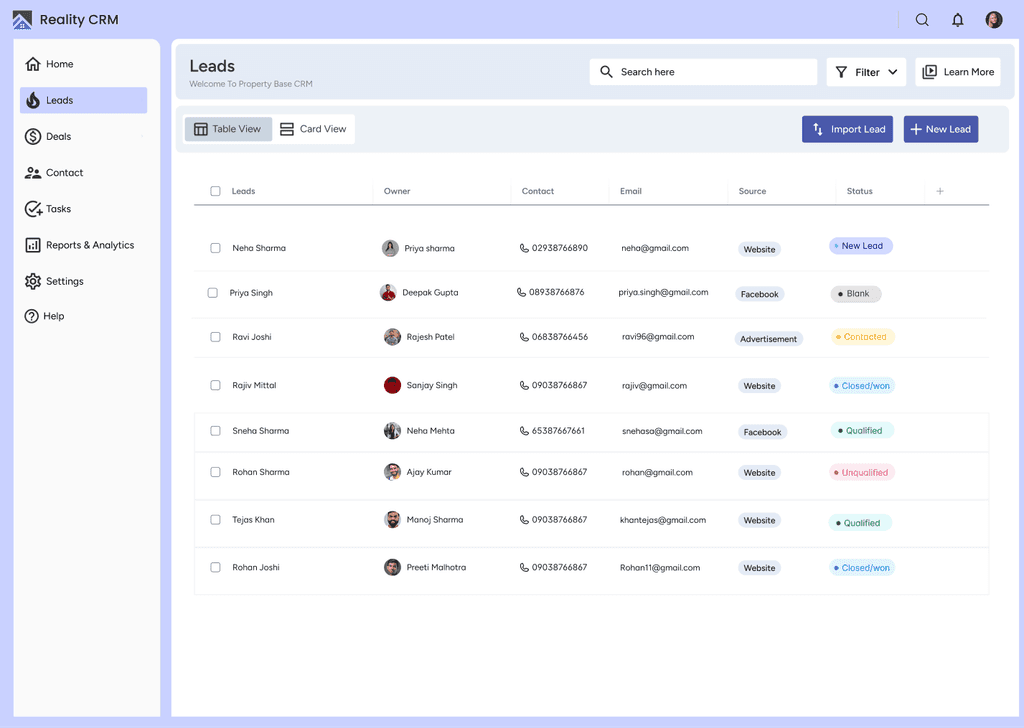
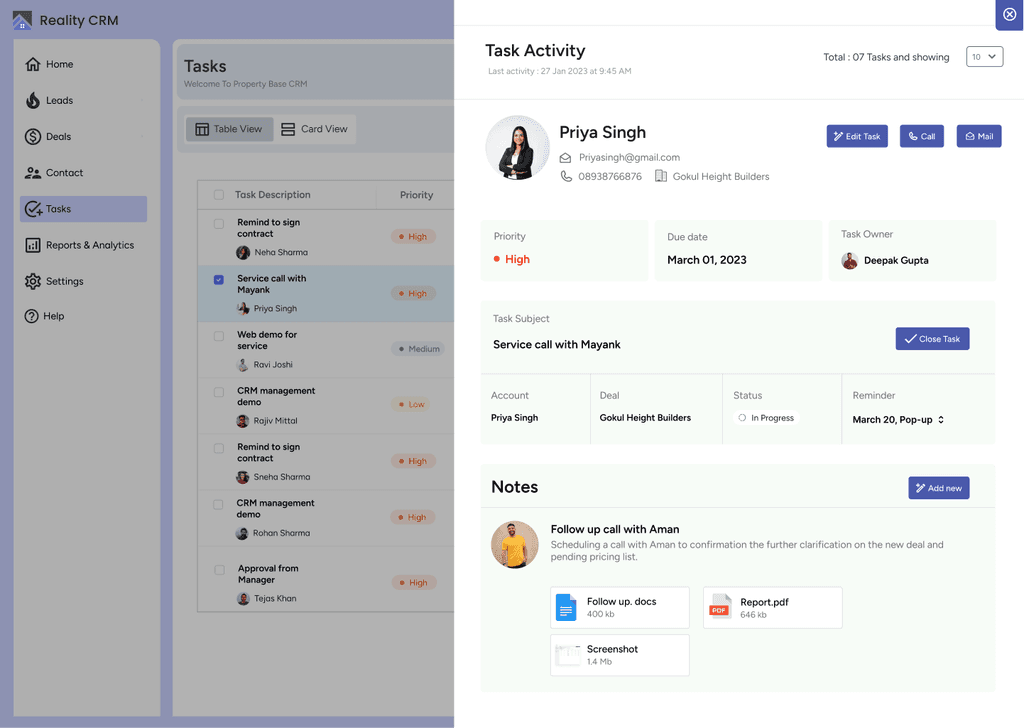
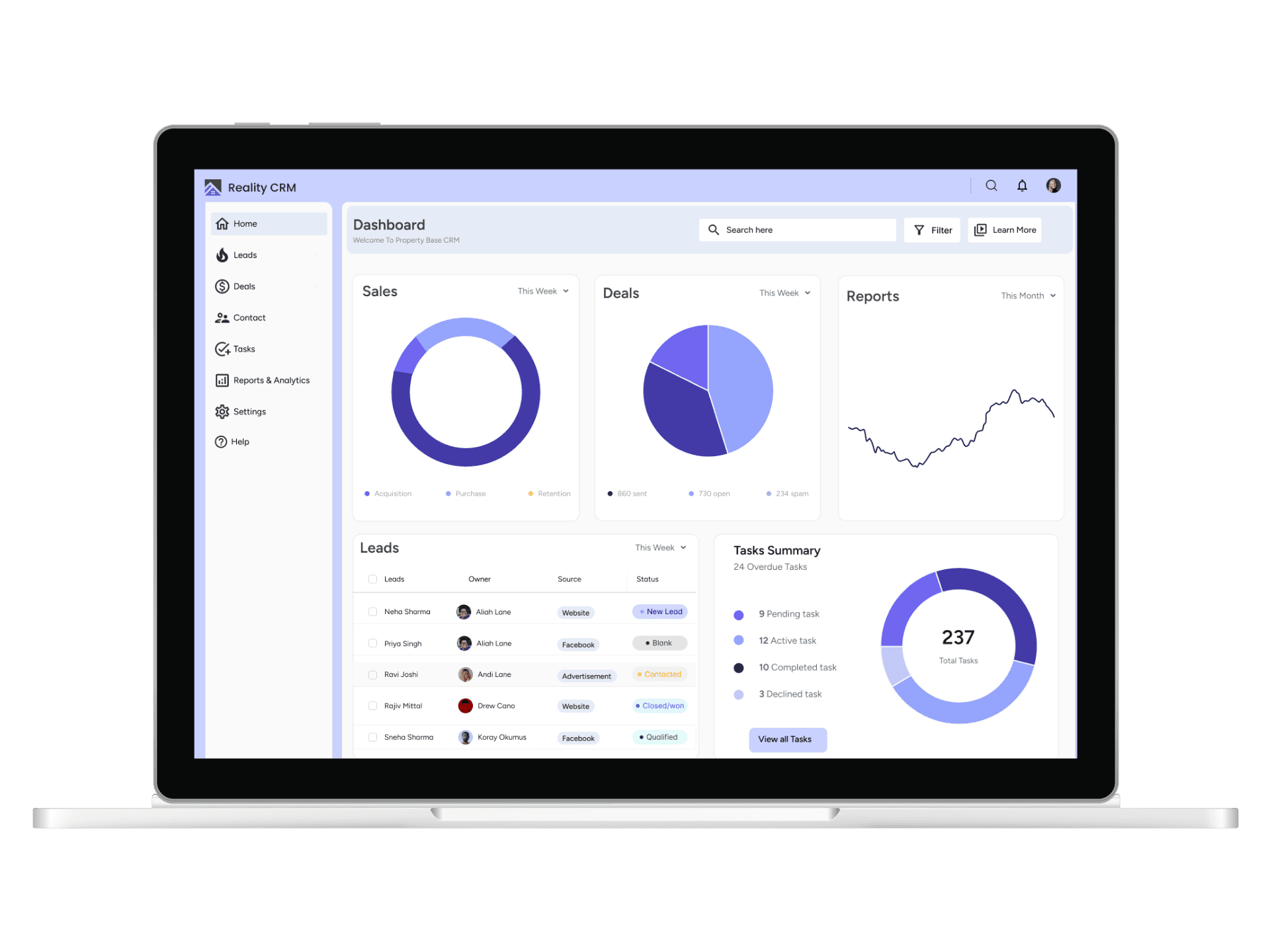
To Design a customer relationship management (CRM) platform specifically catering to the diverse needs of real estate agencies in India, from small teams to medium-sized firms. Helping them effectively manage leads and collaborate within their team.
Understanding the Business Landscape
🔍 secondary research
Customer Relationship Management (CRM) for real estate industry is a system that helps manage customer interactions, from lead generation to deal closing, boosting sales and fostering stronger client relationships.
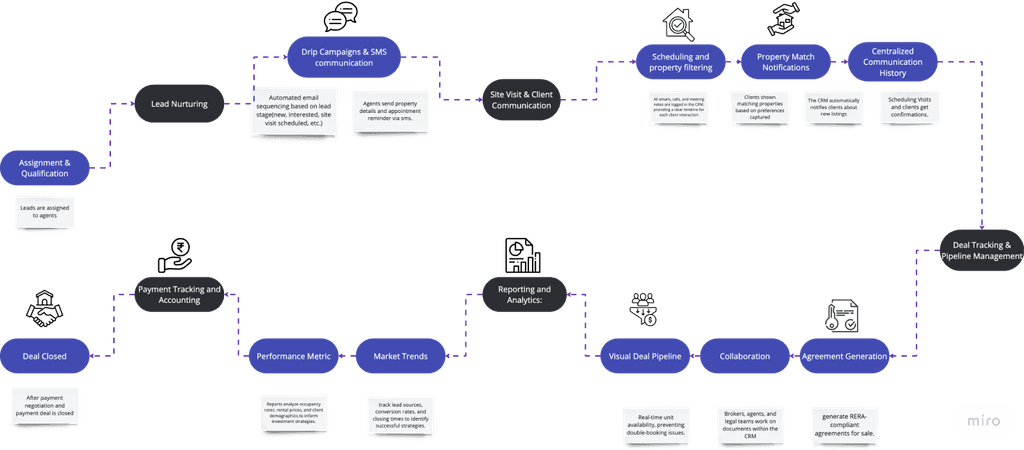
50% of sales managers find CRM implementation tough and less than 40% achieve full adoption, emphasizing the need for better onboarding.
The real estate industry includes real properties and lands. It involves many stakeholders that contribute to the sale and purchase of lands. A land could be commercial, residential, industrial, etc.

Main Finding:
📍field research
Empathizing with the users: Gathering insights through Interviews
Key Insights
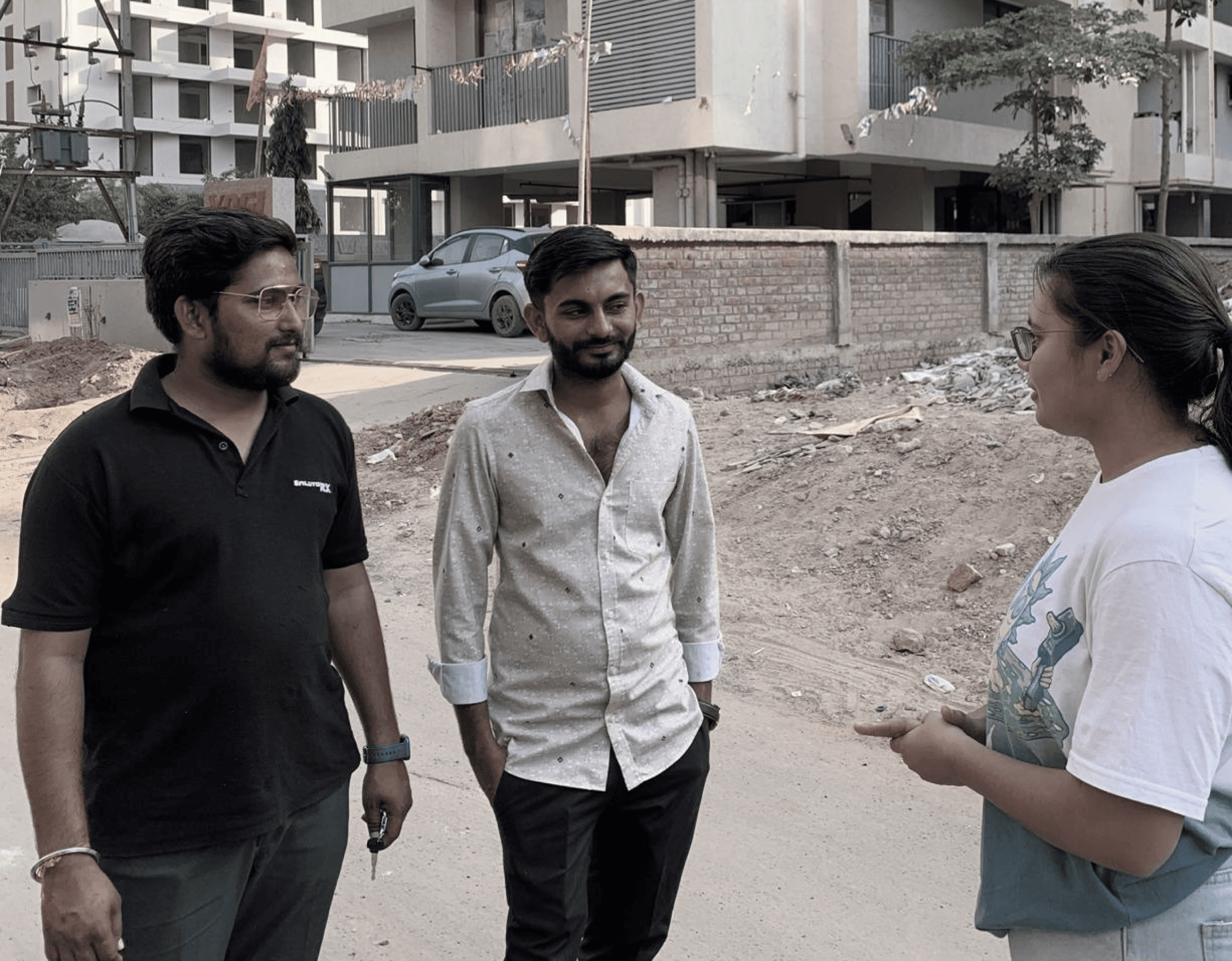
After analysing existing CRM software, we visited a small real estate agency to interview our target users and stakeholders. The interviewee was a real estate agent and a broker.
The interview helped us gain insights on the challenges faced by them in using Salesforce CRM, managing leads etc.
Existing CRMs can be overly complex, with overwhelming features and interfaces that deter both novice and experienced users.
Existing CRMs can be overly complex, with overwhelming features and interfaces that deter both novice and experienced users.
📋 synthesizing insights
📋 Identifying the core problem
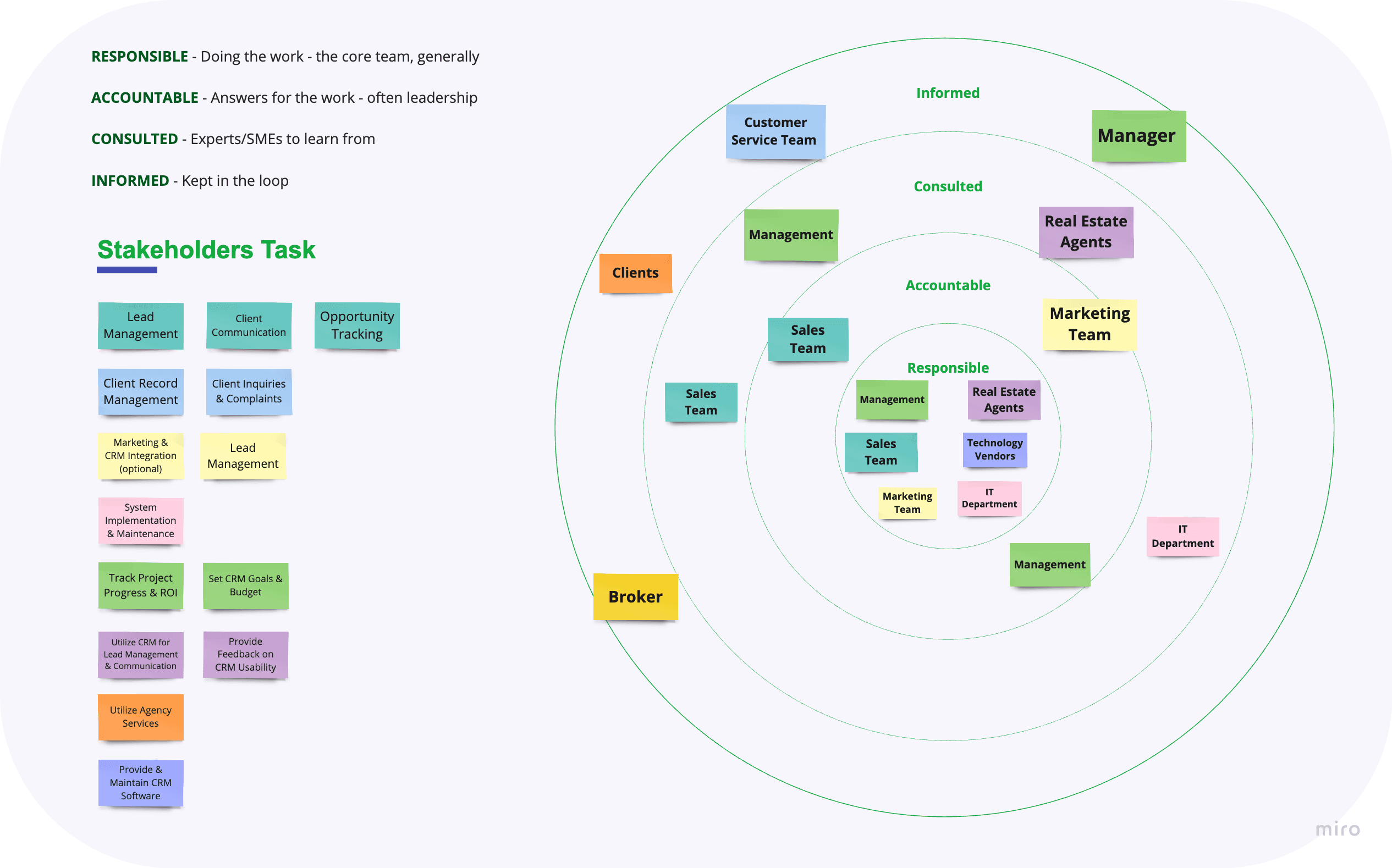
📋 Stakeholder mapping
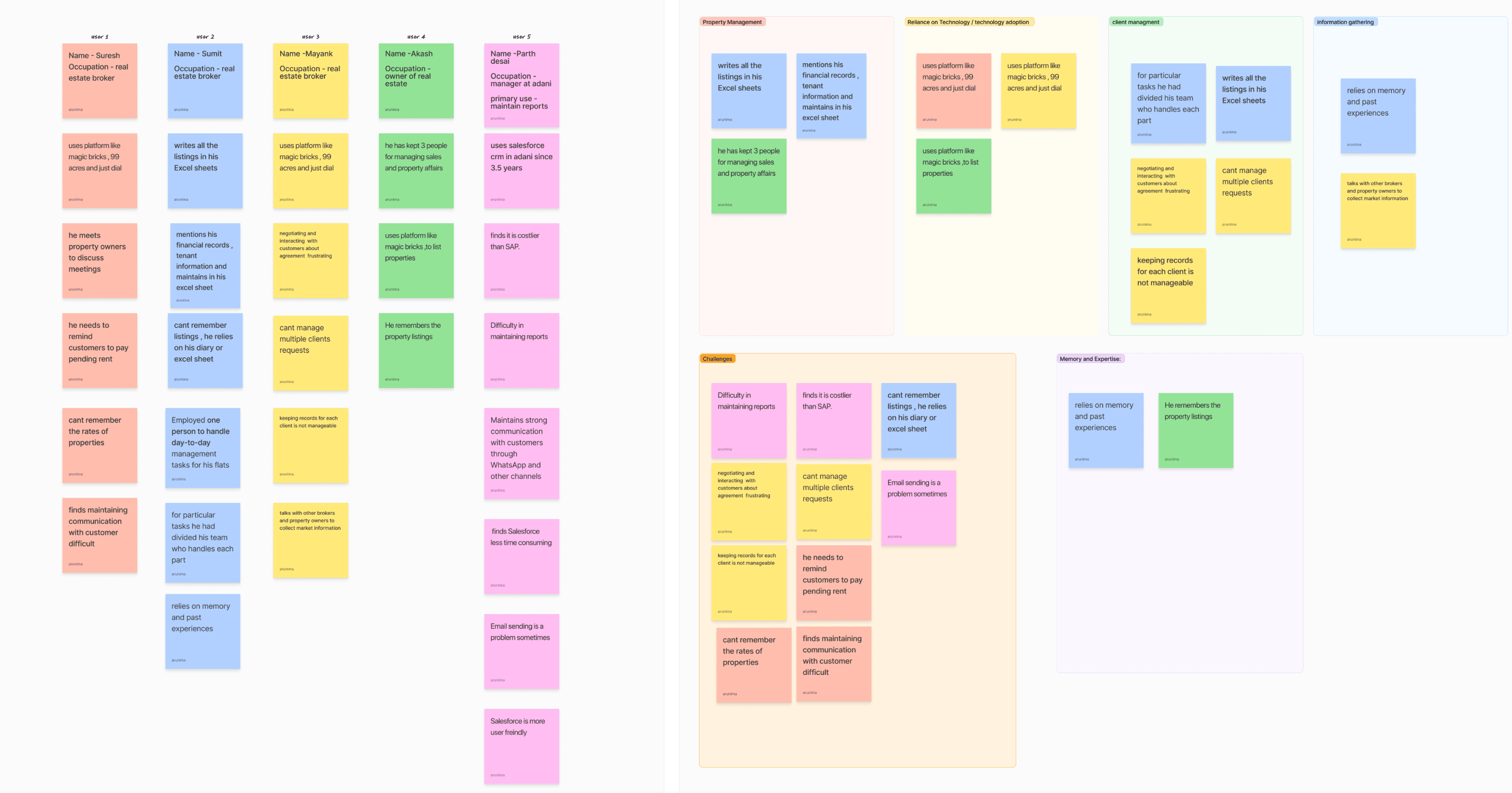
After taking notes from interviews, I wrote my insights and then grouped them to find overlaps.
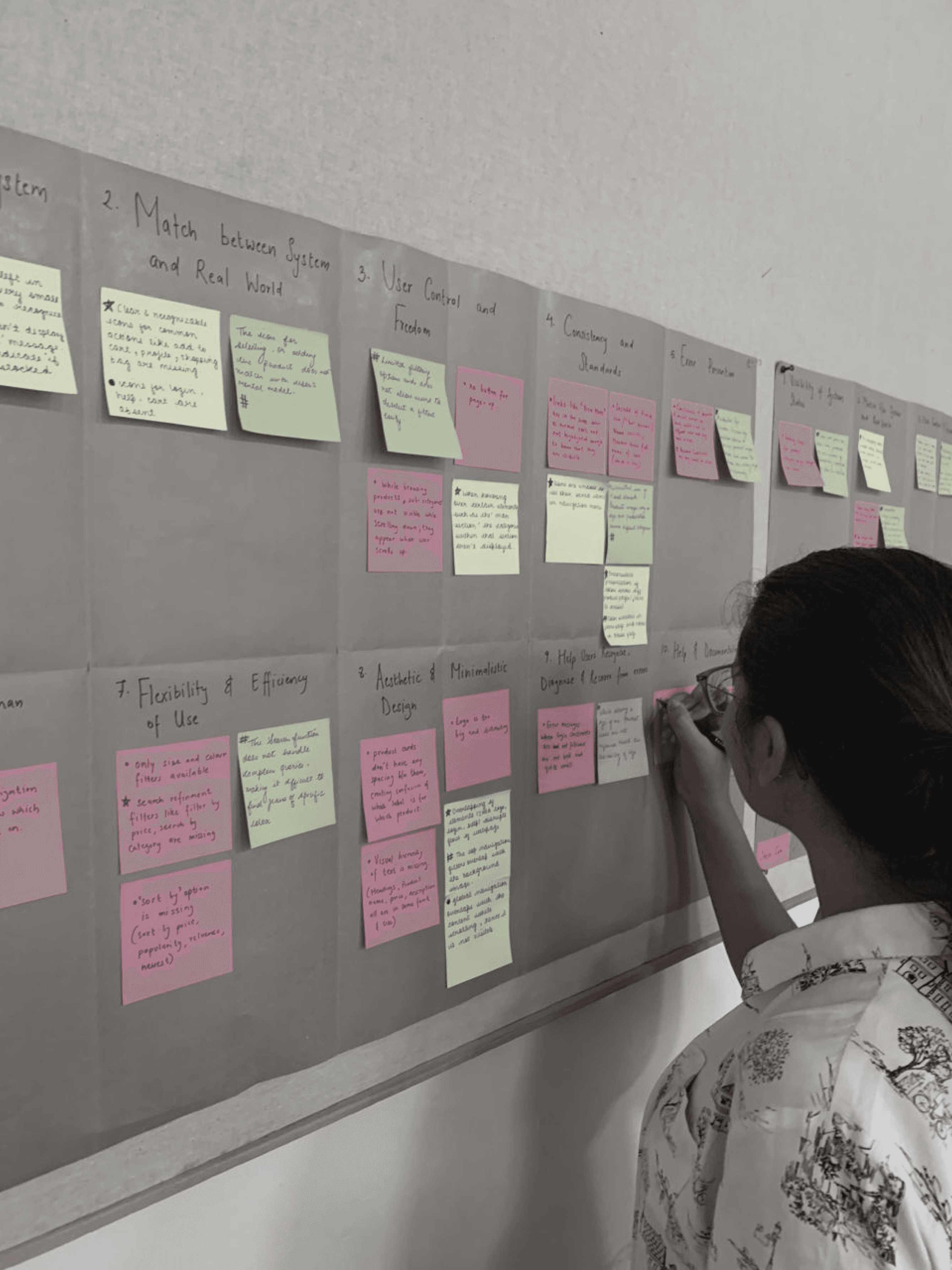
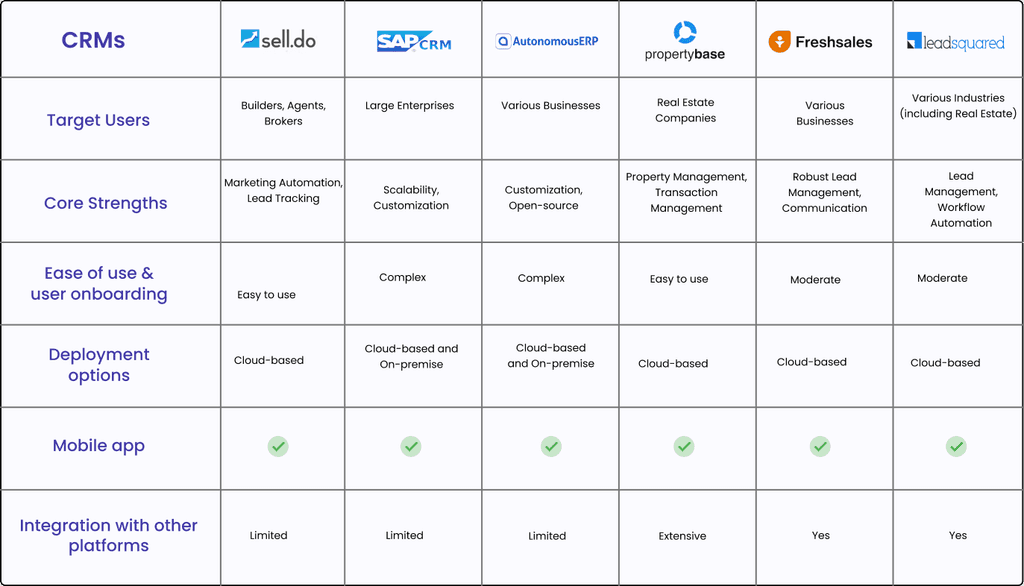
To analyse existing CRM software, we conducted a comparative analysis based on strengths, ease of use, deployment options.
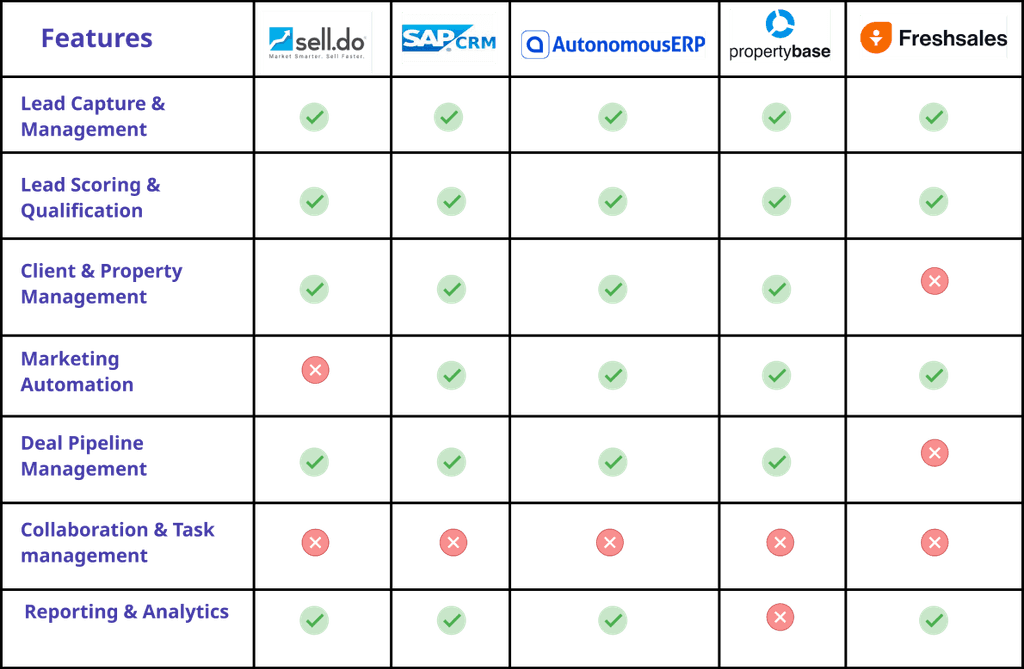
Benchmarking some CRM software based on key features and benefits.
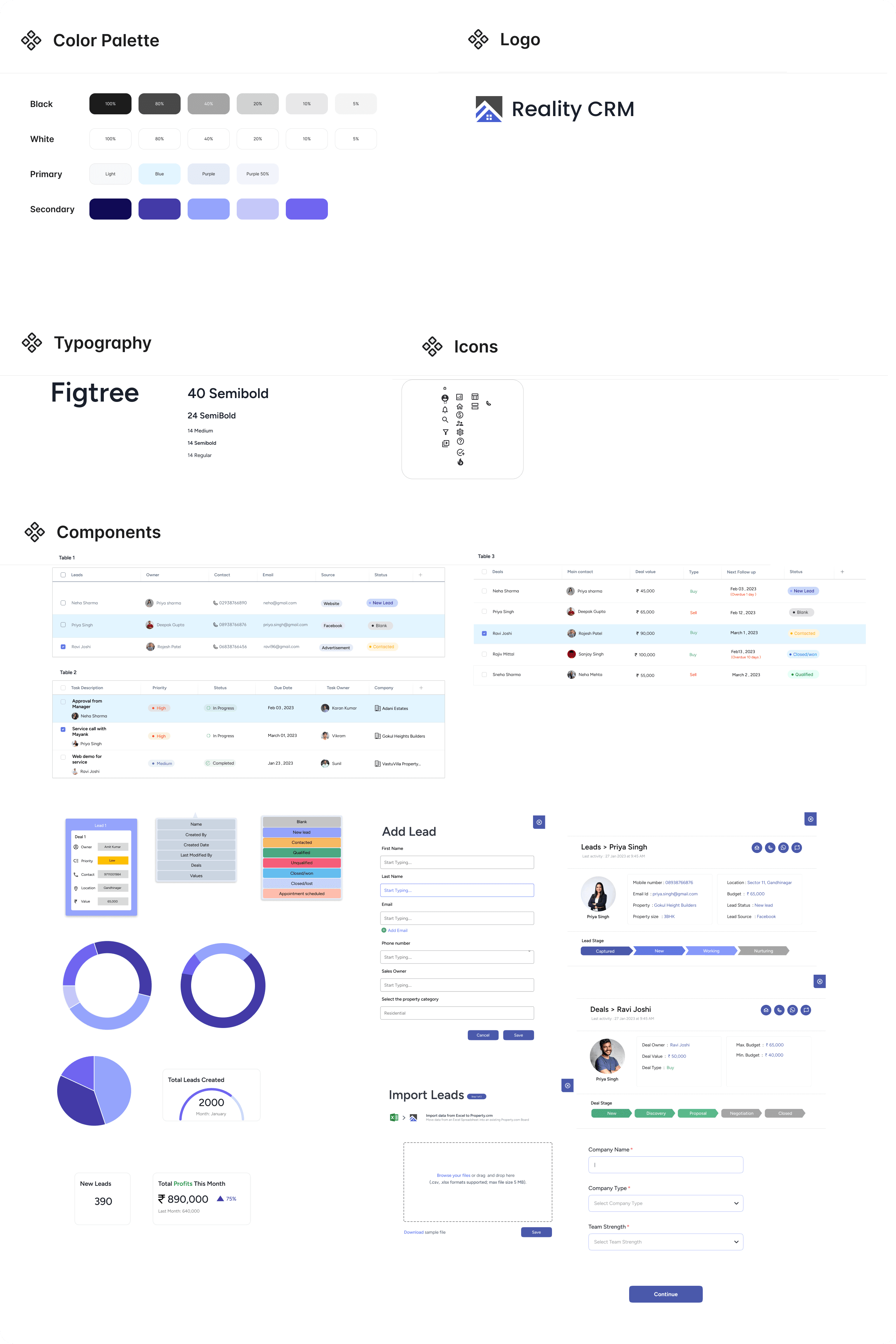
Crafting a design system
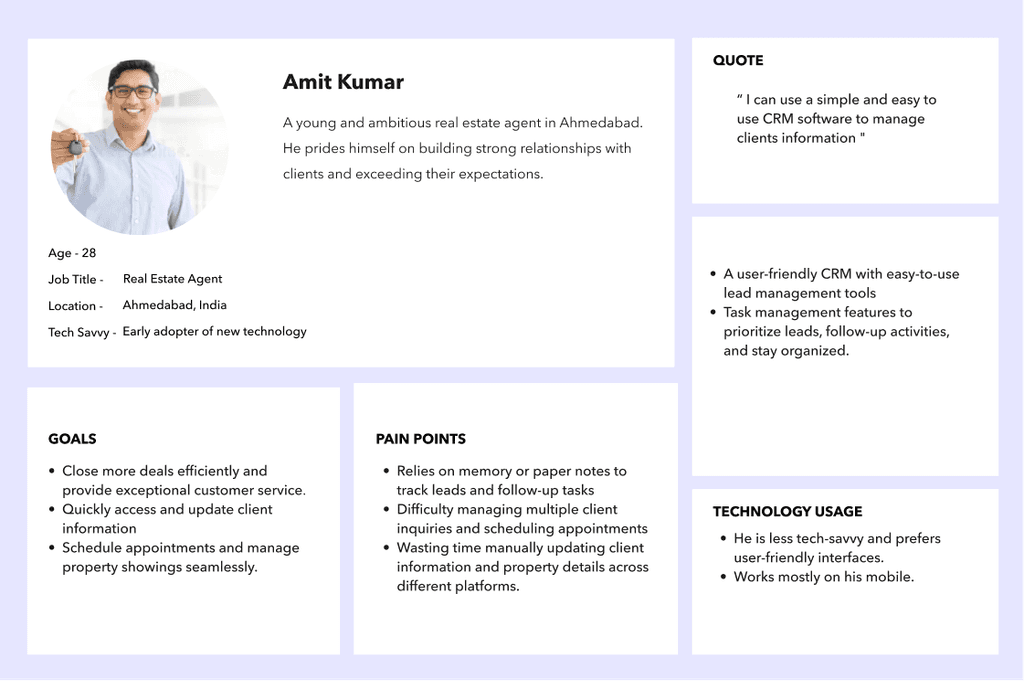
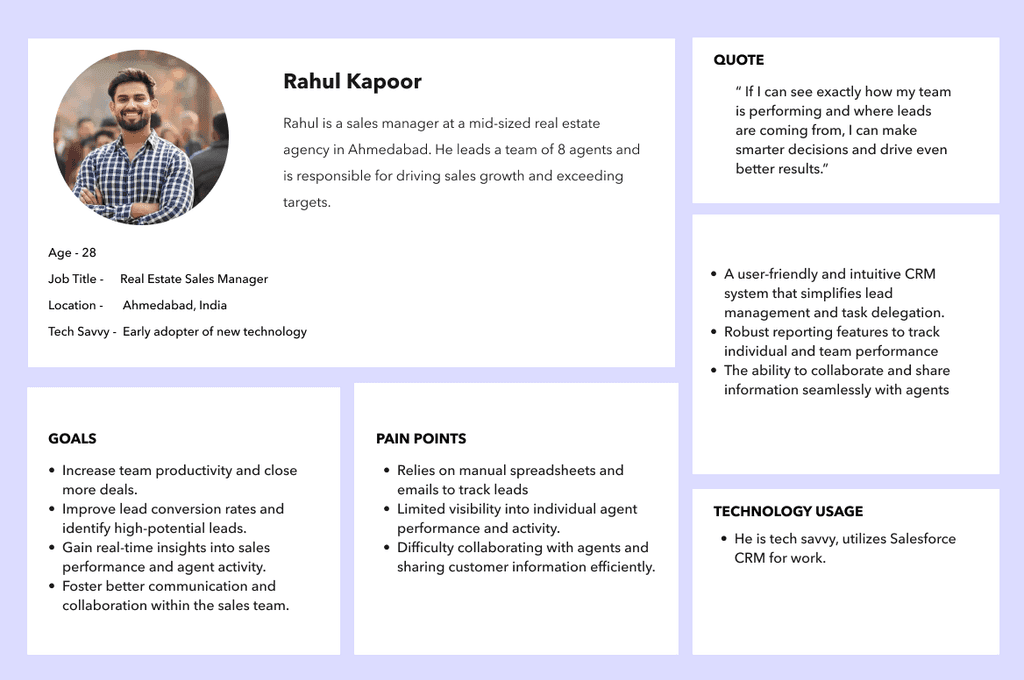
👤 creating personas
After gathering insights from our research, we had an idea of who our target audience was.
PERSONA 1 :
PERSONA 2 :

Communication between sales agents and marketing teams is siloed, leading to missed opportunities for collaboration.
Limited Collaboration & Communication Gaps

Lead Nurturing Challenges
Lack of a structured approach to nurturing leads. Agents often lose track of potential buyers who haven't made an
immediate decision, resulting in missed opportunities.

struggle with scattered customer data across spreadsheets, emails, and handwritten notes. This inconsistency makes it difficult to track leads.
Data Fragmentation & Inconsistency
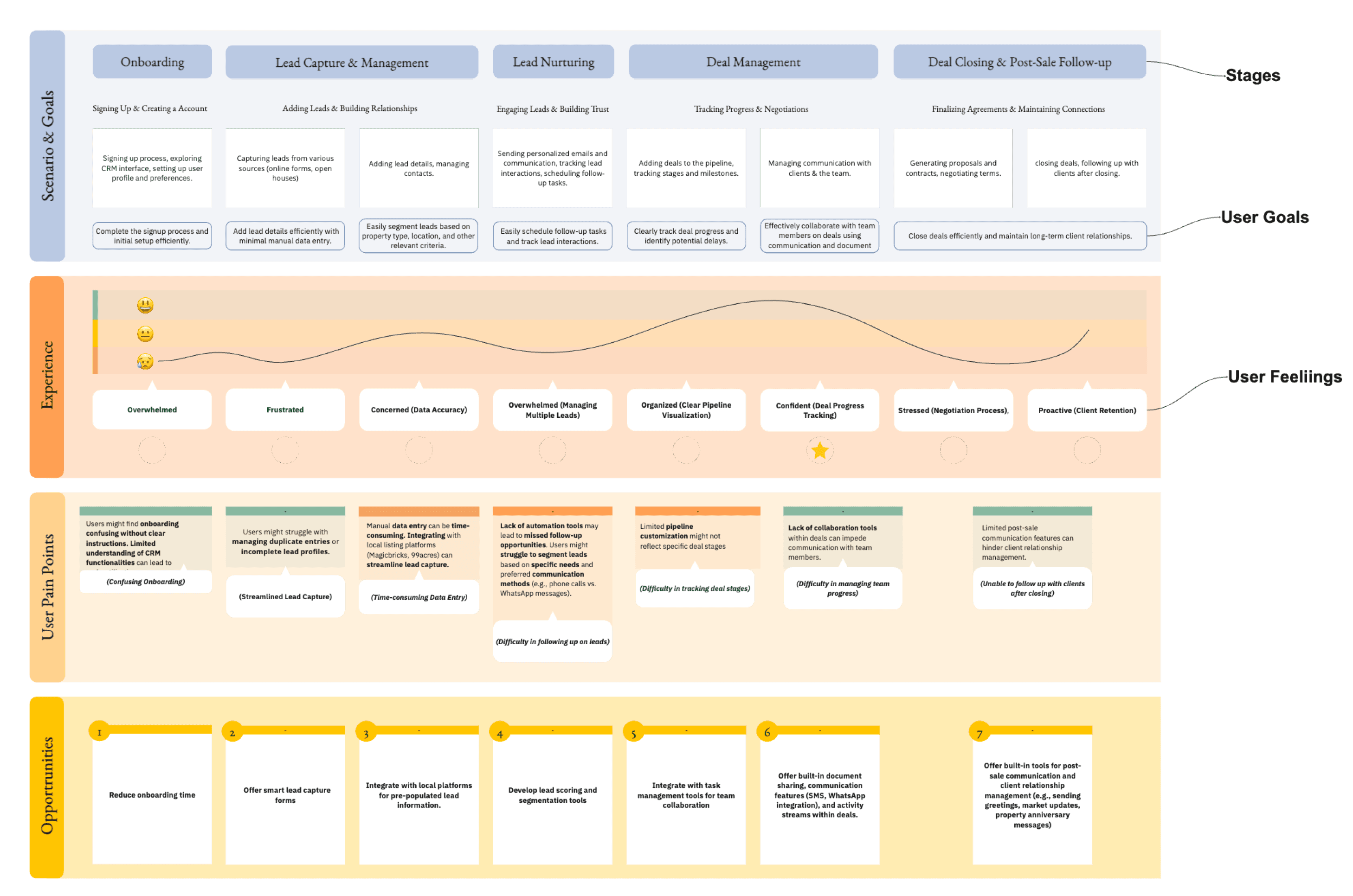
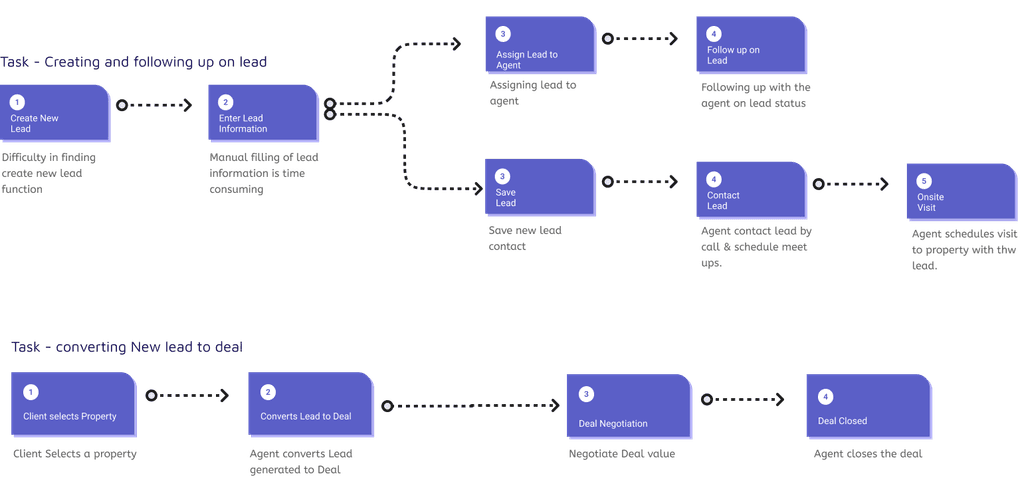
👟 mapping the user journey
Identifying the pain points and opportunity areas along each user step
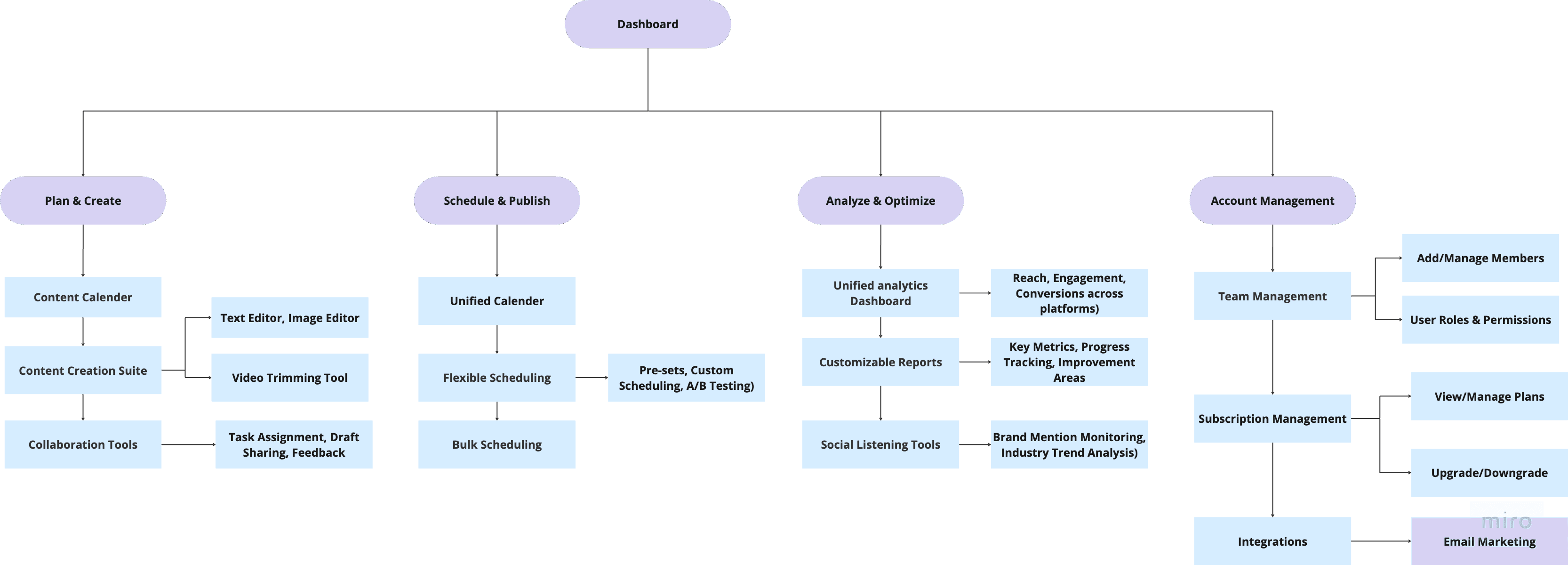
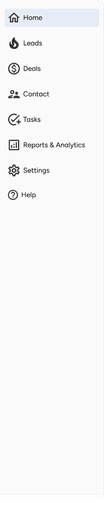
Creating an Information architecture for the interface design
Crafting User Flows
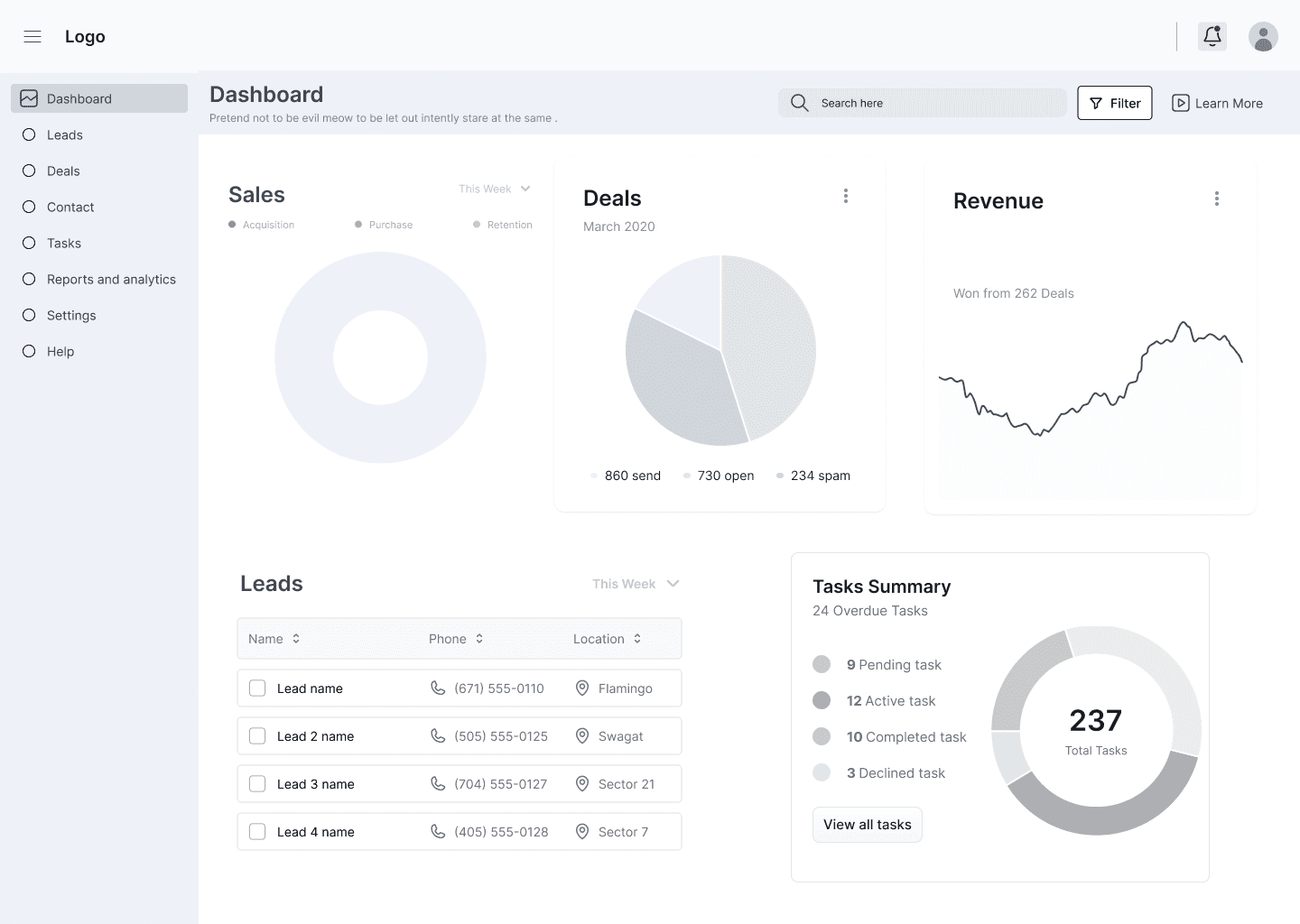
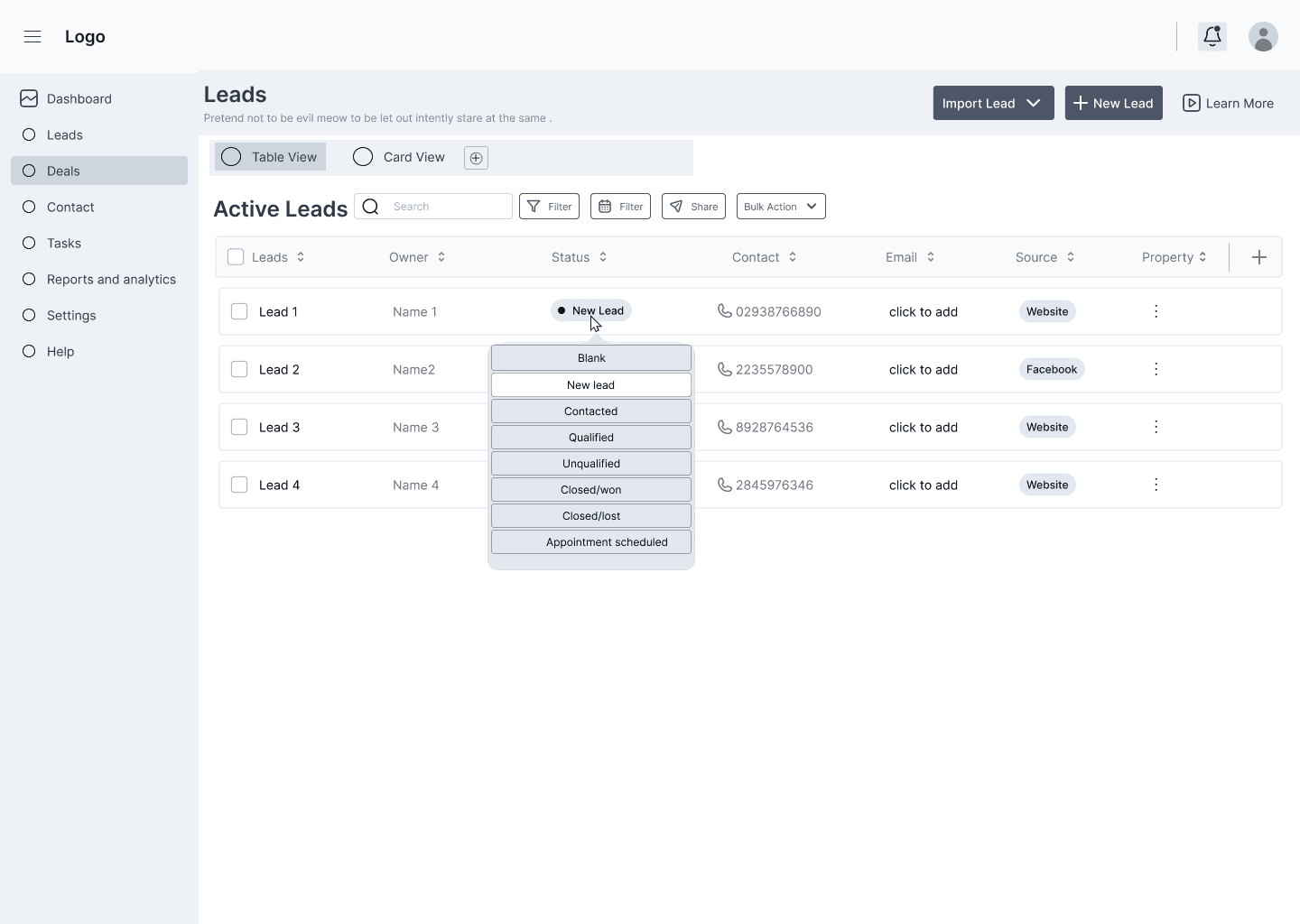
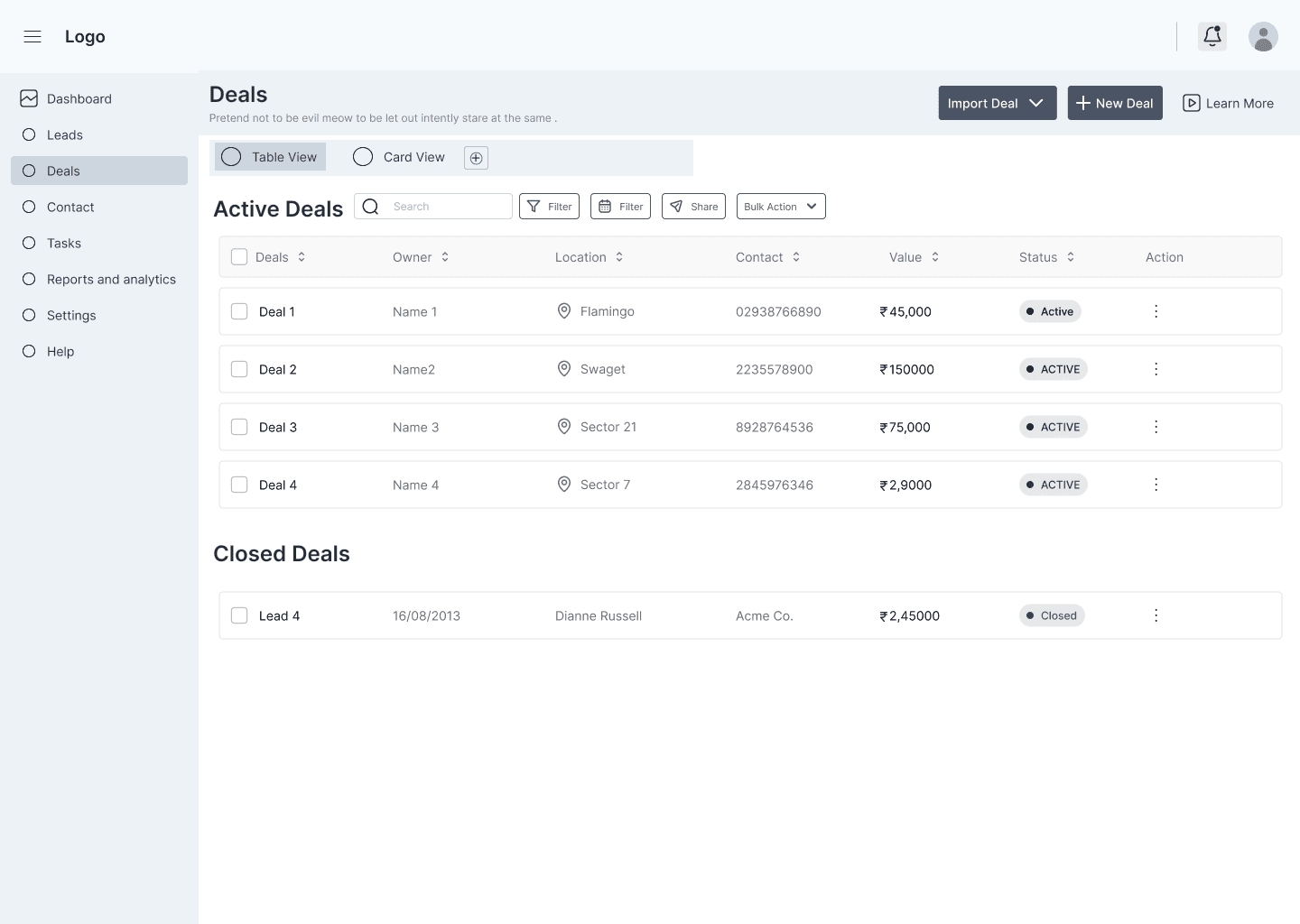
Wireframing
Design System
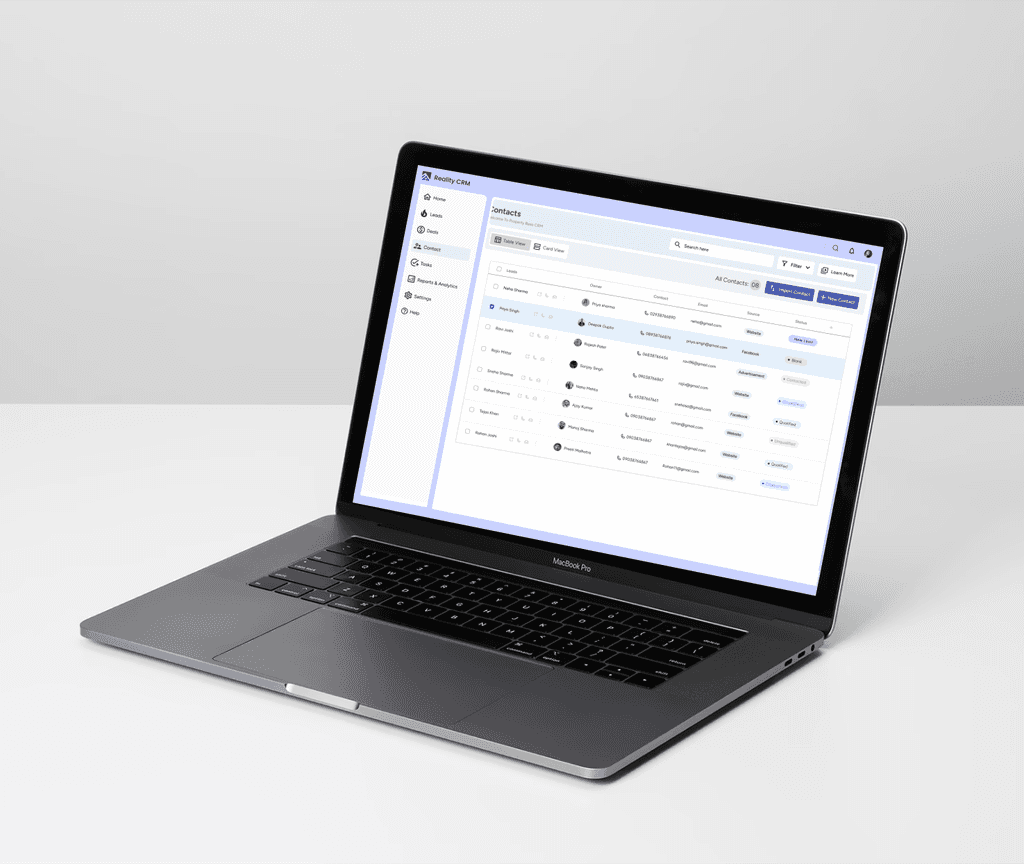
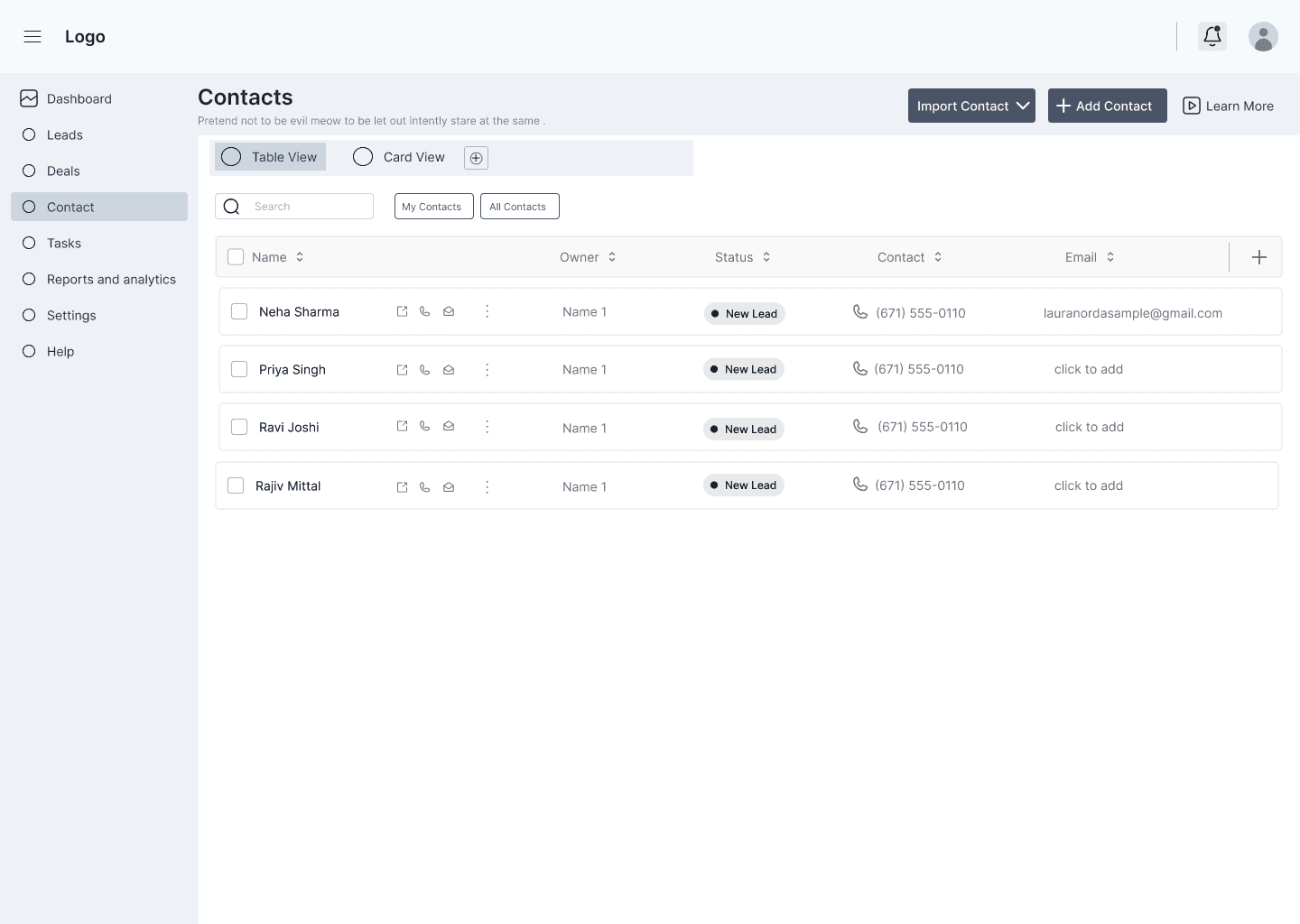
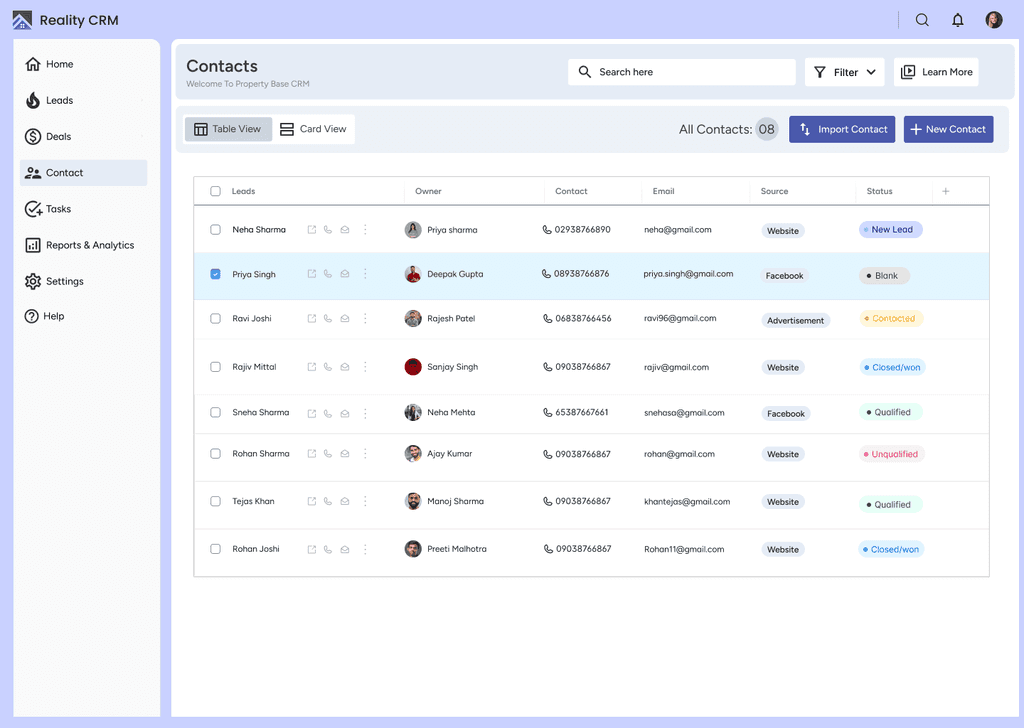
Contacts
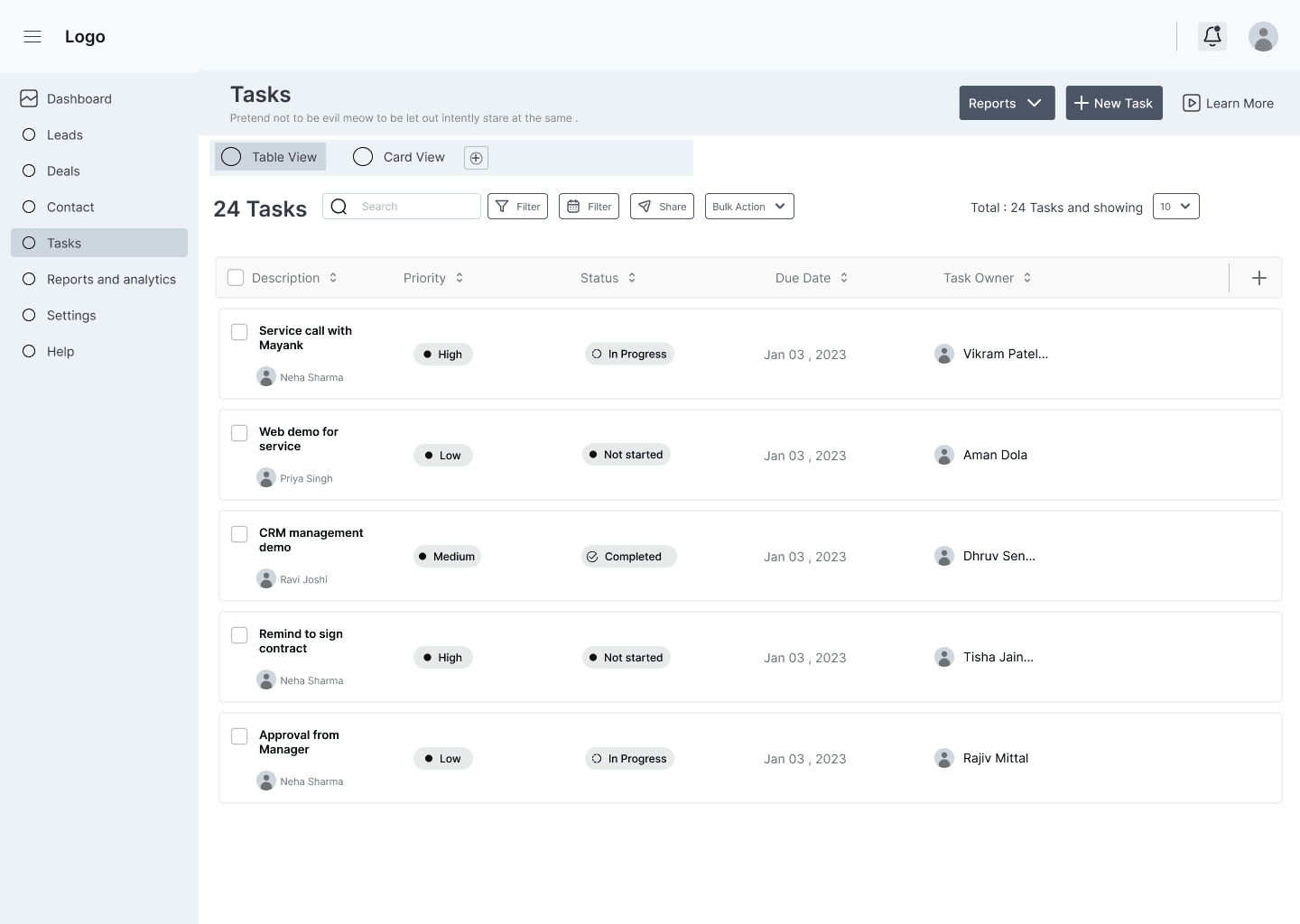
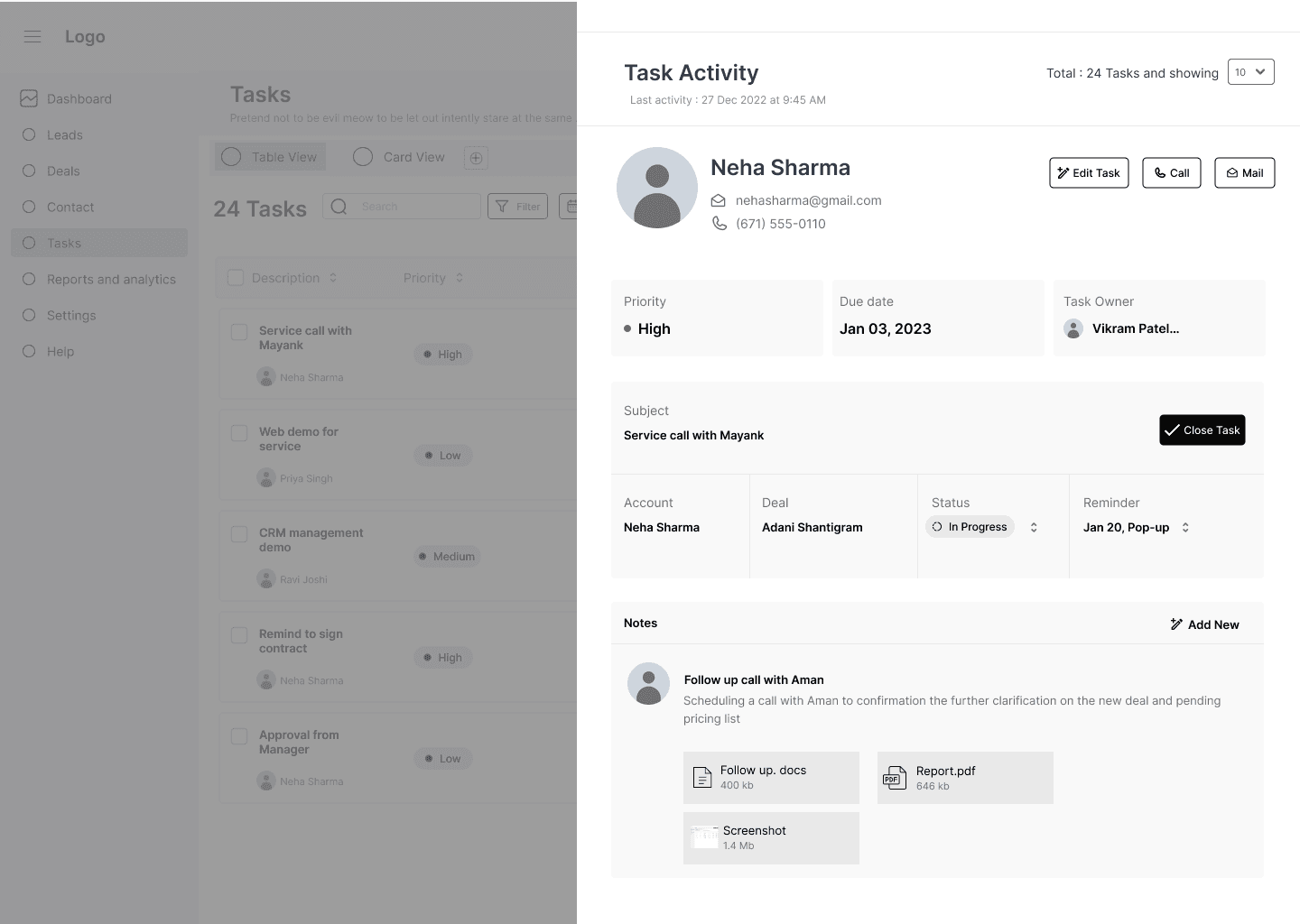
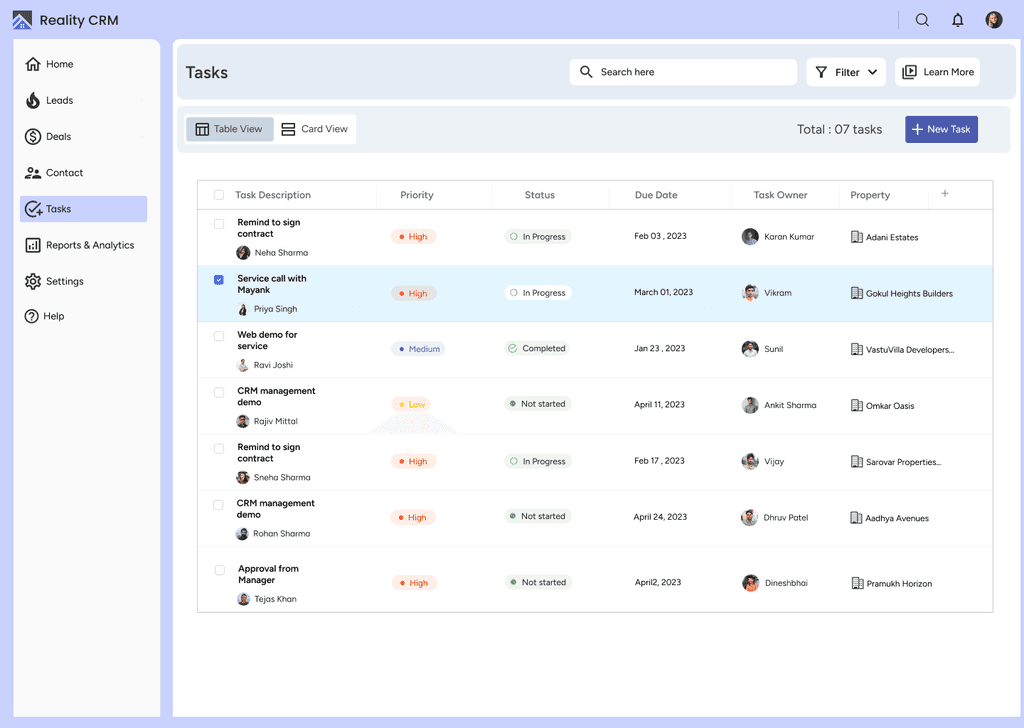
Tasks
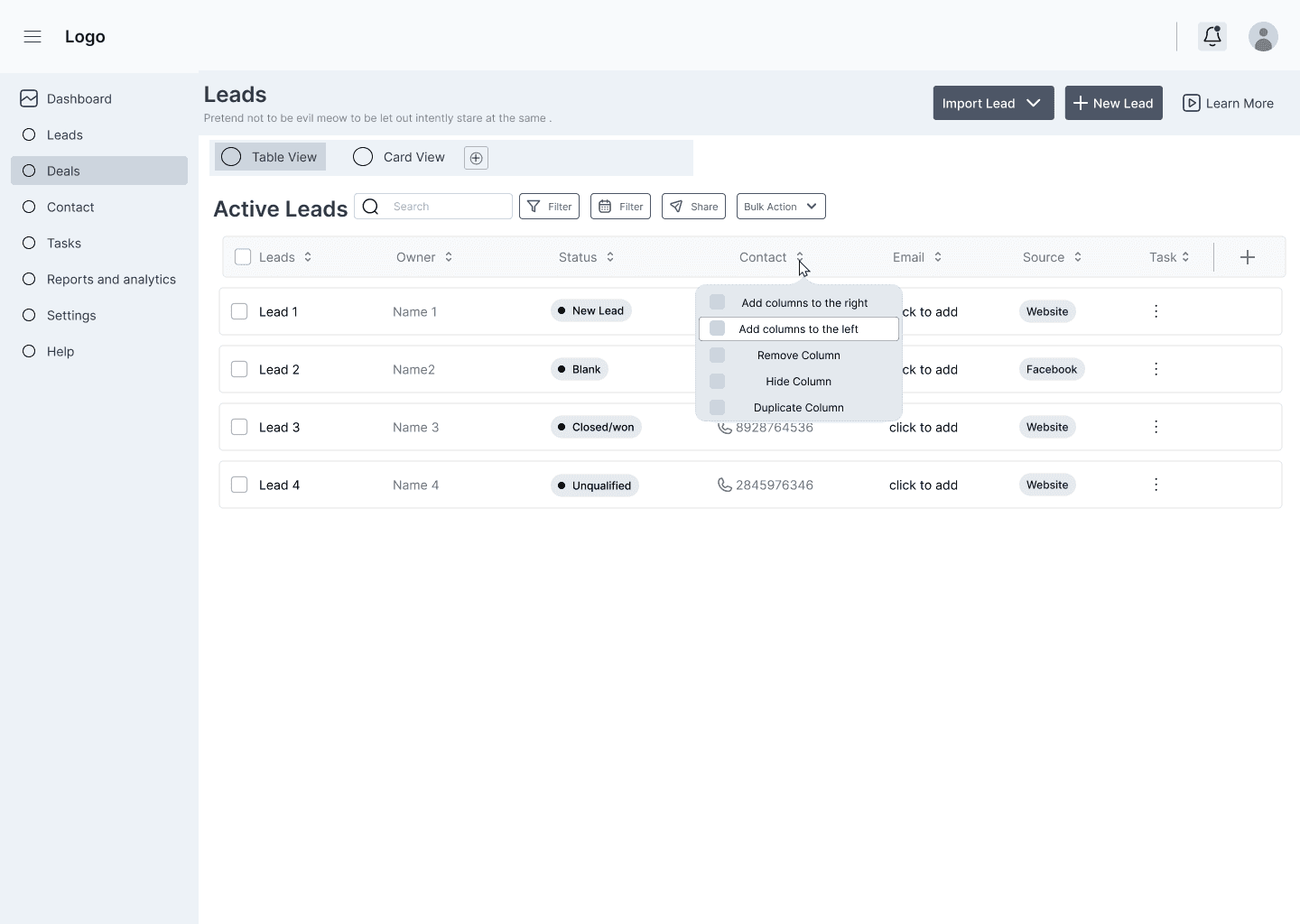
Leads
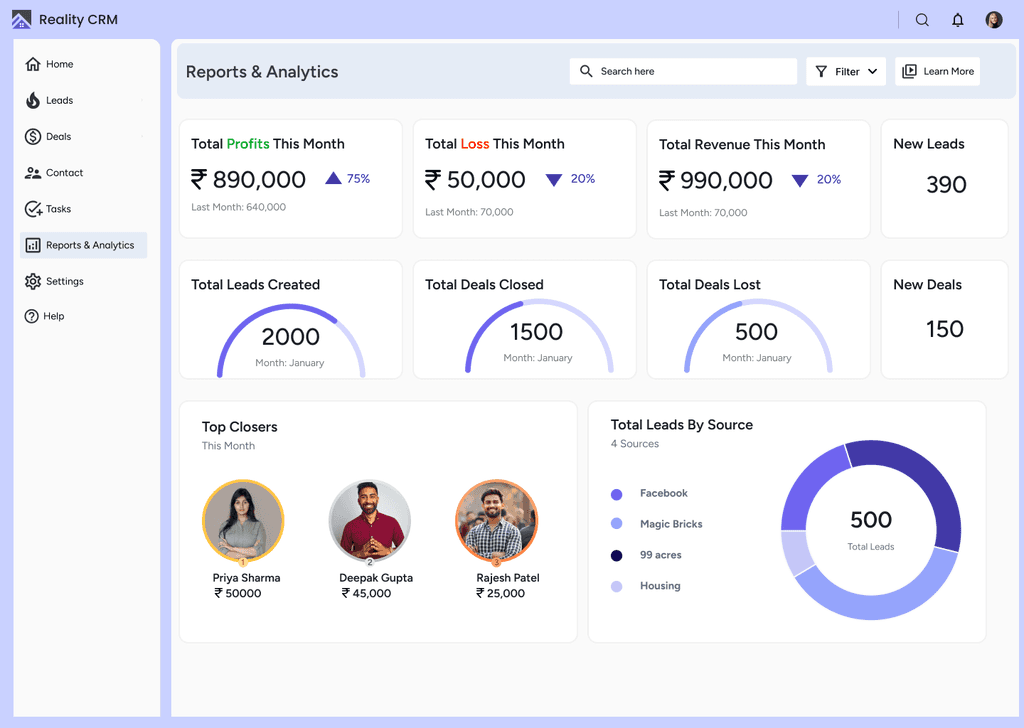
Reports & analytics
Tasks
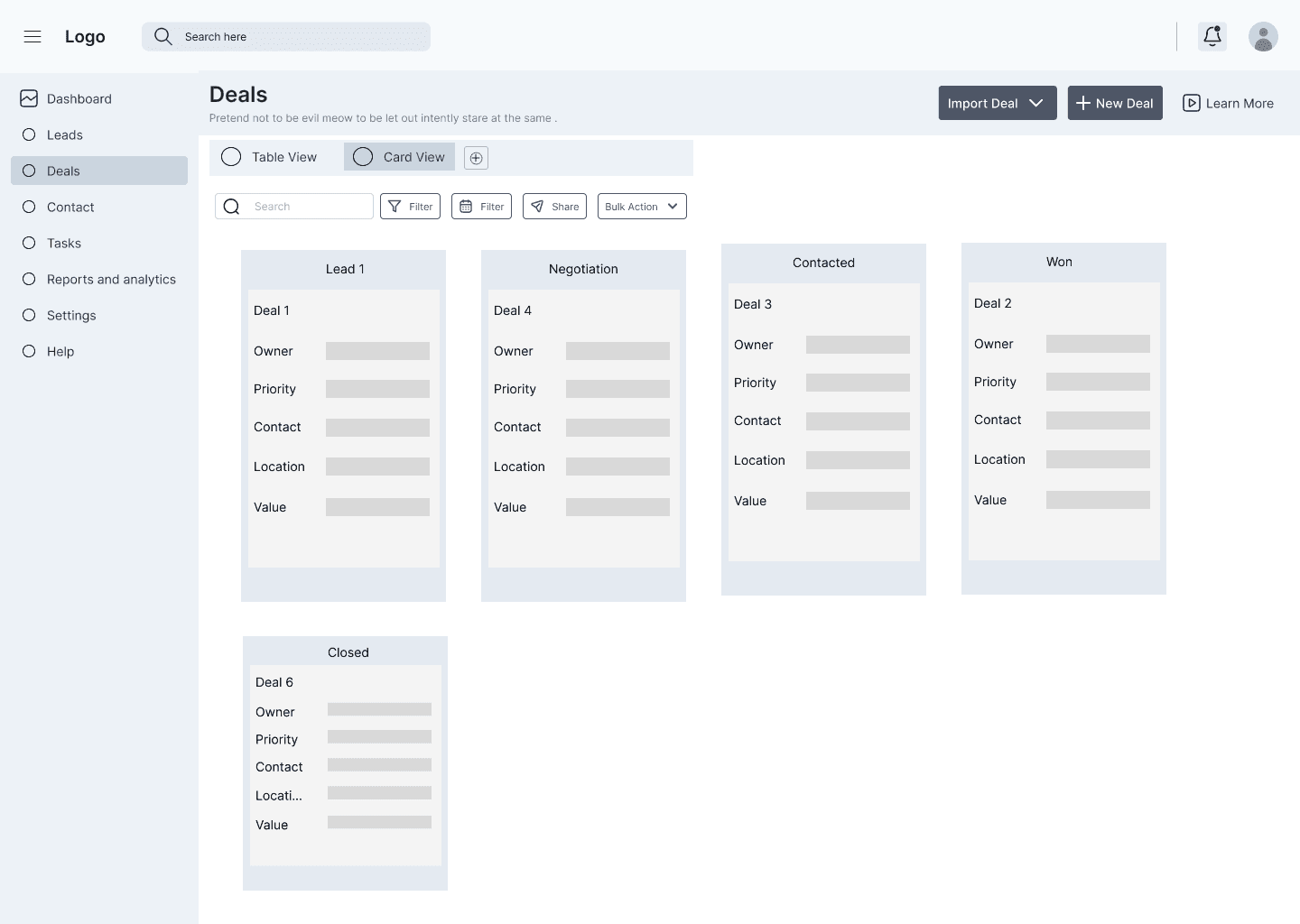
💡Solution
📋 comparative analysis
📋 comparative analysis
📋 benchmarking

💭 takeaways
Through this project we gained valuable insights into real estate business and the Importance of Stakeholder Mapping.
Identifying key stakeholders, Internal and external helped us understand diverse needs.
Overall, this project highlights the importance of user-centric design of CRM platform for the real estate industry.
By addressing specific user needs and pain points, this CRM empowers agents and managers to achieve their goals, cultivate stronger client relationships, and drive overall business success.
Complex Interfaces
Current Customer Relationship Management (CRM) solutions often fall short in addressing the specific needs of real estate agencies in the Indian market, regardless of size. This leads to inefficiencies and missed opportunities.
Reality CRM